
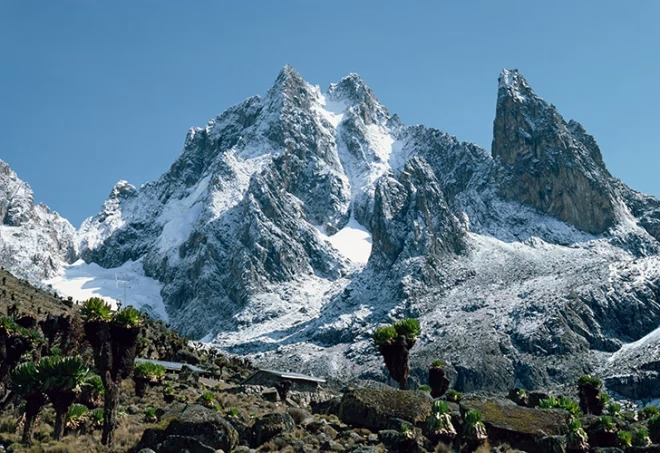

Mount Kenya – Africa’s Hidden Gem for Adventure Seekers
While Mount Kilimanjaro often steals the spotlight, Kenya’s own Mount Kenya remains one of Africa’s most enchanting and underrated treasures. Rising to 5,199 meters, it is the second-highest mountain on the continent, and unlike its Tanzanian neighbor, it offers a quieter, less-crowded experience for adventurers who want to connect deeply with nature.
Mount Kenya is not just a mountain—it is a UNESCO World Heritage Site and a symbol of Kenya’s rich natural heritage. Its three main peaks—Batian, Nelion, and Point Lenana—attract climbers and trekkers from around the world. While Batian and Nelion demand technical climbing skills, Point Lenana is accessible to trekkers with moderate fitness, making it the most popular summit for international visitors.
The journey to the top takes trekkers through a series of unique ecological zones. From bamboo forests alive with monkeys and birds, to alpine moorlands dotted with giant lobelias and senecios, the mountain feels like a living museum of biodiversity. As climbers ascend, they are treated to breathtaking views of glaciers, valleys, and pristine alpine lakes such as Lake Michaelson and Lake Ellis. On a clear morning, the sunrise from Point Lenana casts a golden glow over the landscape, rewarding climbers with one of the most spectacular views in East Africa.
But climbing Mount Kenya isn’t just about physical challenge—it’s also about cultural and emotional connection. Local guides, many of whom have grown up in the mountain’s foothills, share stories and traditions passed down through generations. Trekkers often find themselves bonding with their guides and fellow climbers, creating friendships that last far beyond the journey.
For those who prefer less strenuous adventures, the surrounding areas offer plenty of attractions. The nearby Aberdare National Park provides opportunities for game drives, waterfalls, and forest hikes. Samburu, just a few hours away, offers an incredible safari extension, combining mountain adventure with wildlife exploration. This makes Mount Kenya an ideal addition to any Kenyan itinerary, blending trekking with safari for a truly diverse experience.
In many ways, Mount Kenya is a hidden gem—majestic, wild, and deeply rewarding. It’s a place where travelers can push their limits, connect with nature, and discover the quieter side of Africa’s adventure landscape. For those seeking something different, something authentic, Mount Kenya is waiting to be explored.
 Contact Us